
The Challenge:
Jonathan Atwell Counseling is a specialized marriage counseling practice serving the Colleyville, Southlake, and North Richland Hills areas. At the start of the project, the practice was seeing approximately 15 clients per week, with a long-term goal of scaling to 24–30 weekly sessions by July 2027. This 60%–100% increase in volume supported a broader business objective: transitioning to a cash-pay model at $155 per session while maintaining a sustainable, four-day work week.
The practice's digital presence was not generating meaningful new business. An analysis of the website's performance uncovered several significant issues:
- High Bounce Rate: The site had a 91.49% bounce rate, indicating that the overwhelming majority of visitors left without exploring another page.
- Minimal Organic Search Visibility: The website had generated only two visits from Google search, indicating extremely limited visibility for relevant local search terms.
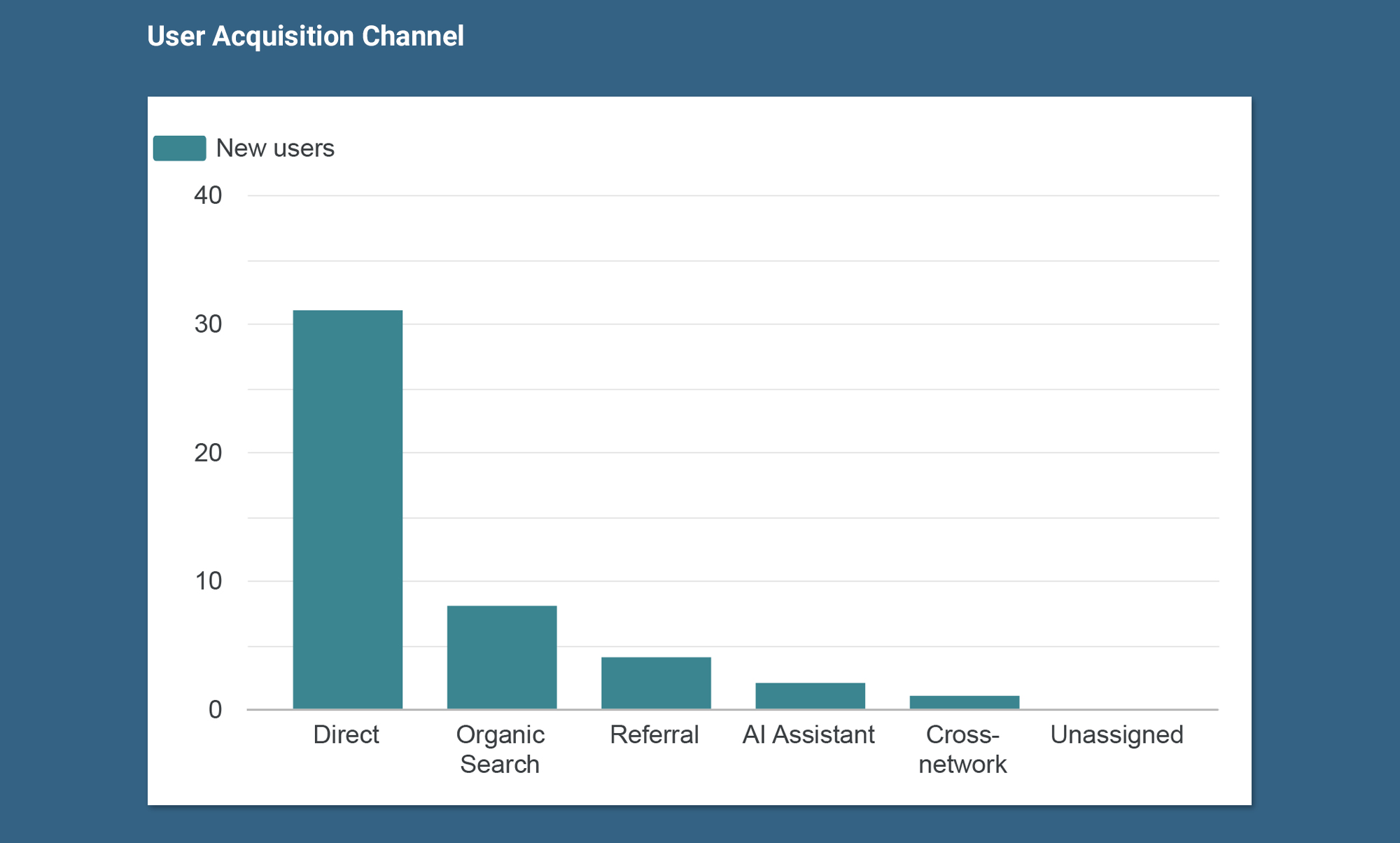
- Declining Traffic:Monthly website traffic had decreased by 67%. Of 47 monthly visitors, 44 arrived through Direct traffic, suggesting that the website was primarily serving people who already knew about the practice rather than attracting new prospective clients.
The Solution: The "Lead Magnet as a Hub" Strategy
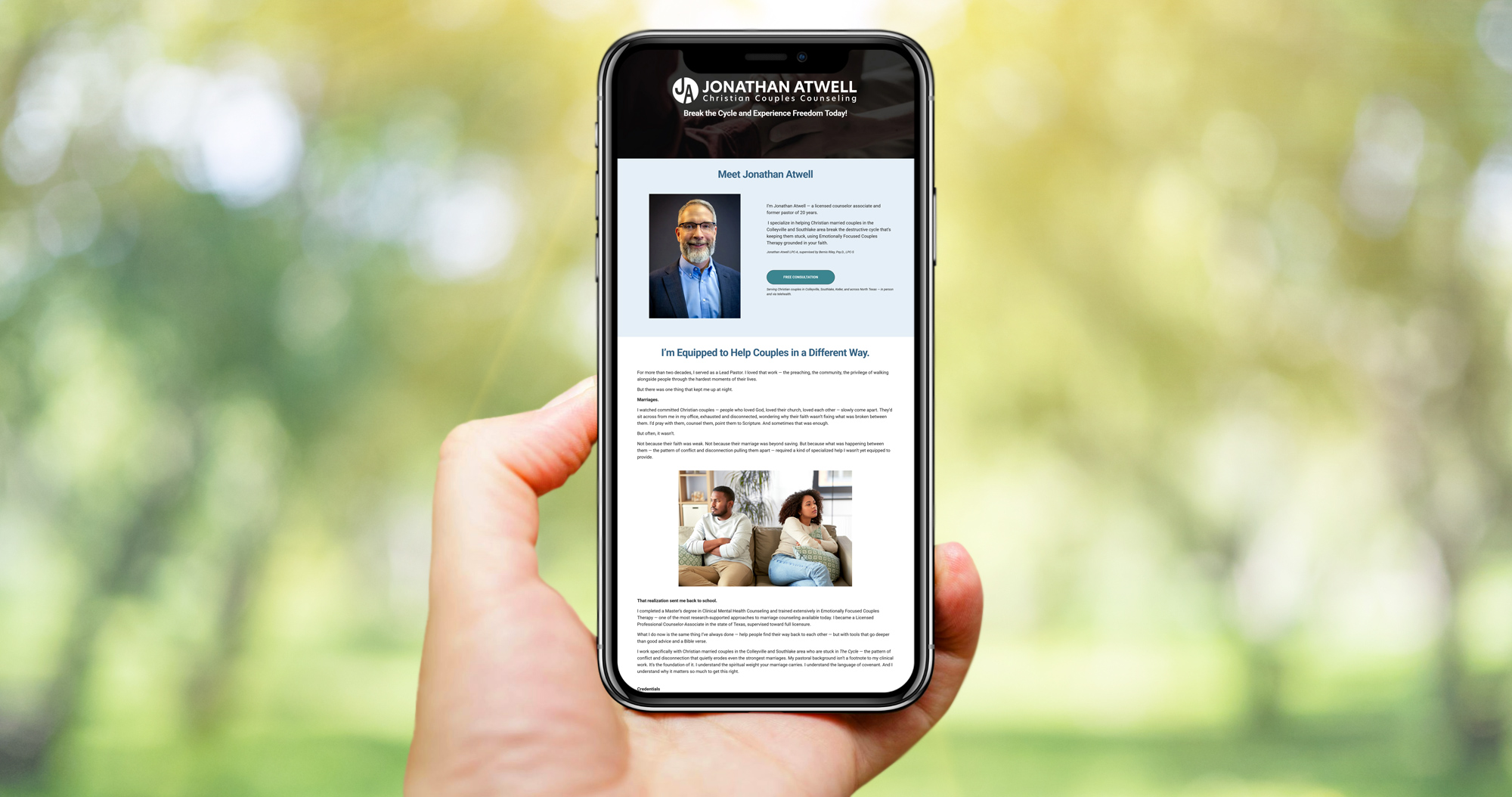
During the discovery phase, I identified an upcoming client brochure, Break the Cycle, as an opportunity to create a unified marketing strategy. Rather than treating the brochure as an isolated PDF download, I proposed using the lead magnet as a central marketing hub that would establish consistent branding, messaging, imagery, and calls to action across the campaign.
This approach organized the project around four interconnected marketing touchpoints:
- Redesigned Squarespace Website: Developed a new website concept around the Break the Cycle visual identity and messaging, with an emphasis on intuitive UX, clear information architecture, and strategic conversion paths.
- Video Marketing Assets: Created custom motion graphic CTAs and branded YouTube bumpers designed to increase campaign visibility, reinforce messaging, and direct audiences toward the broader digital experience.
- Email Marketing Design: Developed custom email headers and visual layouts in Photoshop to support lead-magnet delivery and subsequent email nurturing communications.
- LinkedIn B2B Outreach: Created a five-slide LinkedIn carousel targeting local pastors as potential referral partners, using educational messaging and branded visual storytelling to support relationship-building and expand the practice's referral network.
Together, these components formed an integrated lead-generation strategy designed to move the practice beyond an informational online presence and toward a connected digital ecosystem focused on audience acquisition, engagement, and conversion.
Phase 1: Brand Identity & Core Assets
Once the client and their marketing consultant approved the "hub" strategy, I started working on the foundational design assets. Because the practice didn't have an established brand identity, I audited competing local counseling practices to see what visual elements naturally communicate trust and safety. Based on that research, I developed a calming blue and green color palette to help the practice look credible and stable across the board.

Next, I designed a professional logo and developed the Break the Cycle brochure. I built this asset to handle two different marketing jobs at once: a high-value physical handout for pastors and referral partners, and a gated digital download to capture leads on the website.
In the affluent Colleyville/Southlake area, local pastors are often the very first contact for couples going through a marriage crisis. By turning this brochure into a targeted B2B referral campaign, we unlocked a high-trust acquisition channel that completely bypasses the need for expensive traditional ad spend.
Structuring the design and messaging this way gave the practice a cohesive brand experience from day one. As soon as the brochure was finalized, it was ready for both print and digital distribution without any delays.

Phase 2: The Digital Hub (Website Redesign & UX)
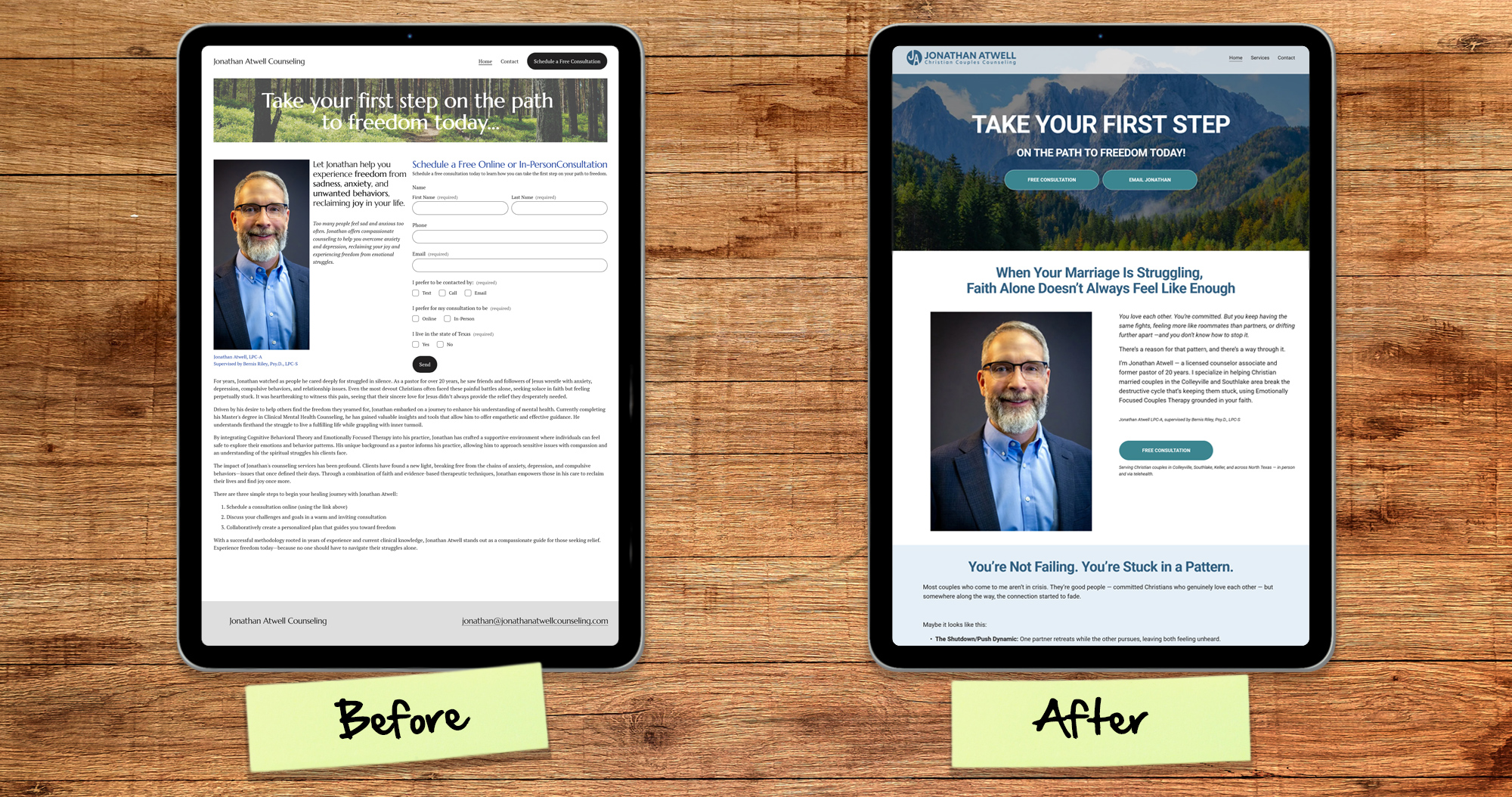
The original website relied heavily on dense, long-form text blocks that felt overwhelming and made it tough for visitors to find what they needed to take action. Plus, the site was missing critical trust indicators like dedicated service pages and clear FAQs.
I rebuilt the entire site on Squarespace with a strict focus on clarity, simple navigation, and user psychology:
- Homepage Hero Section: Redesigned the top of the page with a clear value statement and obvious, branded Call-to-Action (CTA) buttons.
- Clean Layout: Broke long paragraphs down into scannable, digestible sections so the text is easy to read.
- Proper Heading Hierarchy: Implemented a clean H1 through H4 heading structure to keep the site organized for both users and SEO crawlers.
- Streamlined Forms: Redesigned the contact and intake forms to cut down on friction and make them easier to fill out.
- Dedicated Navigation Pages: Added specific Services and FAQ pages to answer common client questions before they ever jump on a phone call.
Phase 3: Technical SEO & GEO Strategy
Part 1: On-Page Strategy & Authority
To compete for competitive terms like "Christian marriage counseling," the website needed to prove deep expertise. When looking at top local competitors, I noticed they all used standalone landing pages for specific therapeutic modalities. To match that depth, I proposed adding dedicated sub-topic pages covering:
- Biblical Conflict Resolution Frameworks
- Premarital Counseling (Preparing for a God-Centered Marriage)
- Restoring Trust After Infidelity (Faith-Based Healing)
Positioning Shift: From Generalist to Specialist
The original homepage tried to present the client as everything at once—an individual therapist, marriage counselor, faith leader, and clinical expert. But when a couple is in a relationship crisis, they aren't looking for a generalist; they want a specialist. By trying to speak to everyone, the original copy didn't really connect with anyone. From an SEO standpoint, this lack of focus made it hard for Google to rank the homepage because it wasn't the single most relevant result for any specific topic.
To fix this, the client decided to position himself strictly as an EFT (Emotionally Focused Therapy) + Faith-Based Specialist. This narrower focus makes it much easier to rank for high-intent, long-tail search queries where bigger, generalist websites lack the depth to compete.
Part 2: Intent-Mapped Keyword Strategy
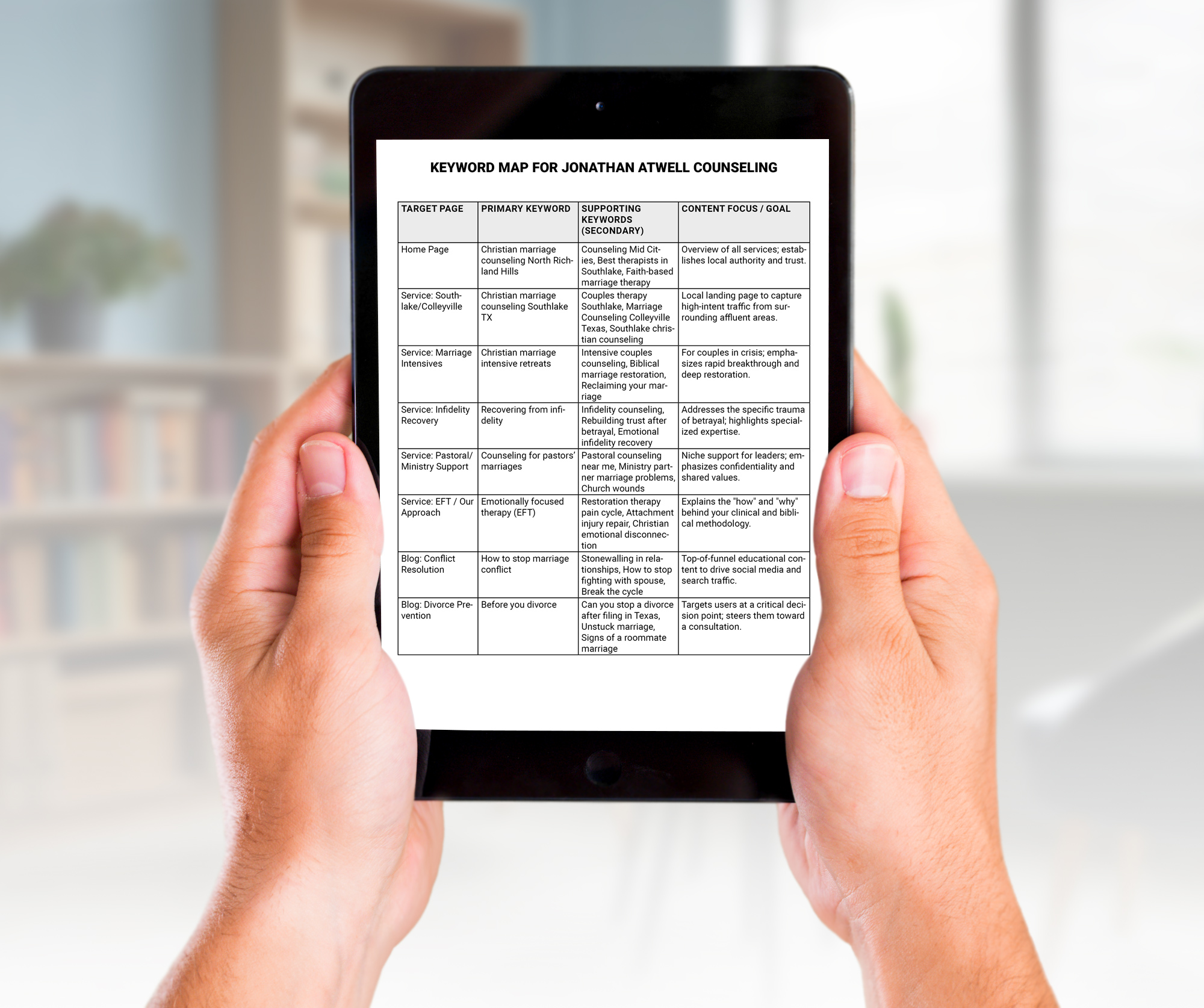
The baseline audit showed that the original site only indexed for branded terms like "Jonathan Atwell" or abstract words like "freedom" and "joy." It had absolutely no visibility for high-volume commercial keywords in the Southlake and Colleyville markets.
The new keyword strategy focuses entirely on quality over quantity, targeting bottom-of-the-funnel keywords used by people who are ready to take immediate action:
- Hyper-Local Relevance: Targeting affluent searchers in Southlake and Colleyville who are within a reasonable driving distance of the office.
- Clinical & Spiritual Alignment: Using terms like "Emotionally Focused Therapy" and "Pastoral Counseling" to highlight the client's 20-year history in ministry alongside his formal clinical training.
- Pain-Point Precision: Mapping out specific phrases like "stonewalling" and "roommate marriage" because that is the exact language struggling couples use when describing their relationship issues.
I mapped these keywords into six logical topic clusters, giving the client a clear "hub-and-spoke" content blueprint that proves topical authority to search engines while giving users a clear path to book a consultation
Part 3: Local SEO & Generative Engine Optimization (GEO)
The original website copy mentioned too many target cities (North Richland Hills, Keller, Southlake, Colleyville), which diluted the local relevance and caused Google to see the practice as a broad regional provider. To fix this geographic dilution, I created standalone, city-specific landing pages. This gives search engines the precise local data they look for to rank businesses in the Map Pack while letting us tailor the messaging to the specific demographic profile of each community.
To prepare the site for AI Search Experiences (GEO) and LLM search engines, I added an optimization layer:
- Scannable Content: Turned core text blocks into clear, bulleted lists on all primary service pages, making it easy for AI engines to scrape and cite the data.
- Google Business Profile (GBP) Optimization Recommendations: Provided the client with a step-by-step optimization blueprint. I recommended manually adding specific service listings like "EFT-Trained Couple Therapy" and uploading the Break the Cycle lead magnet as a core product asset to maximize local visibility
- Keyword-Rich Review Strategy: Built a custom outreach framework for the client to use with professional peers. This strategy maps out how to encourage colleagues to mention specific semantic terms like "Christian counselor" and "EFT" in their Google reviews to help build algorithmic trust.
Phase 4: Social Proof & Referral Pipelines
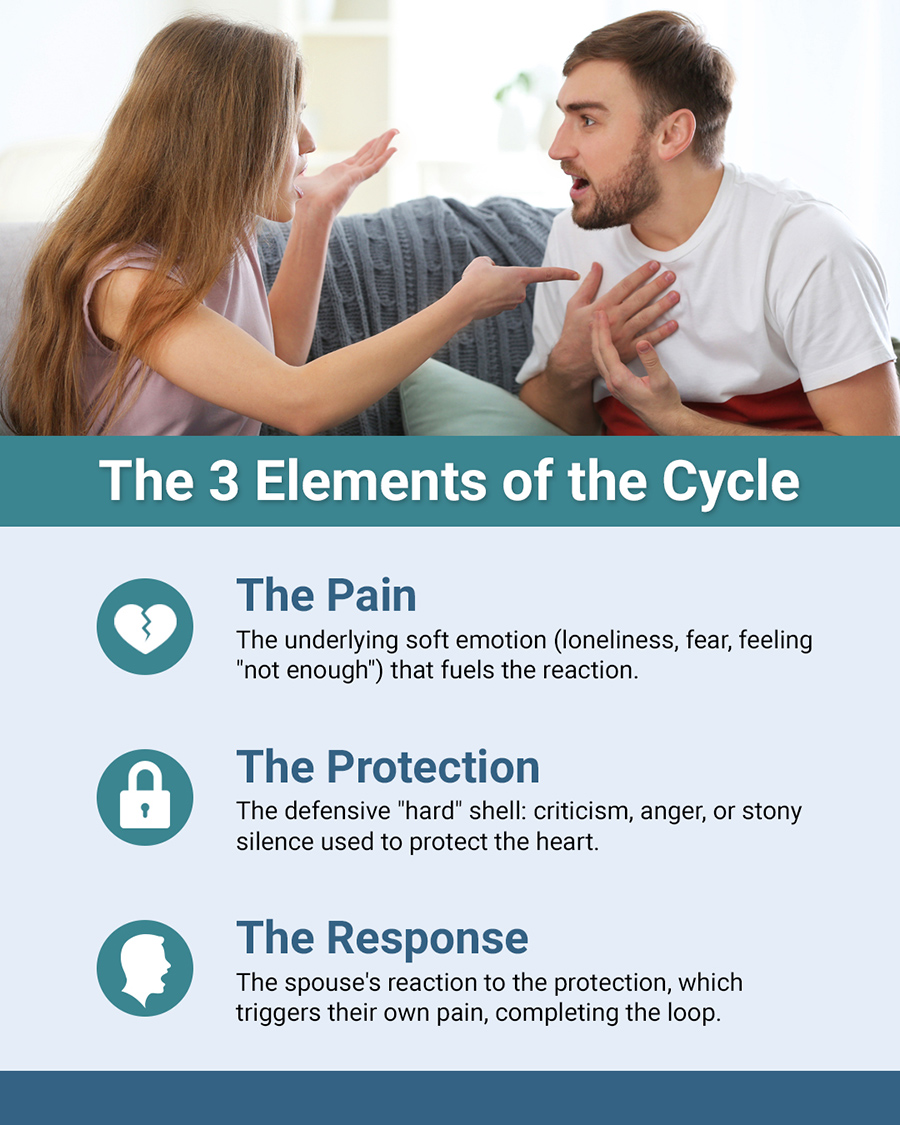
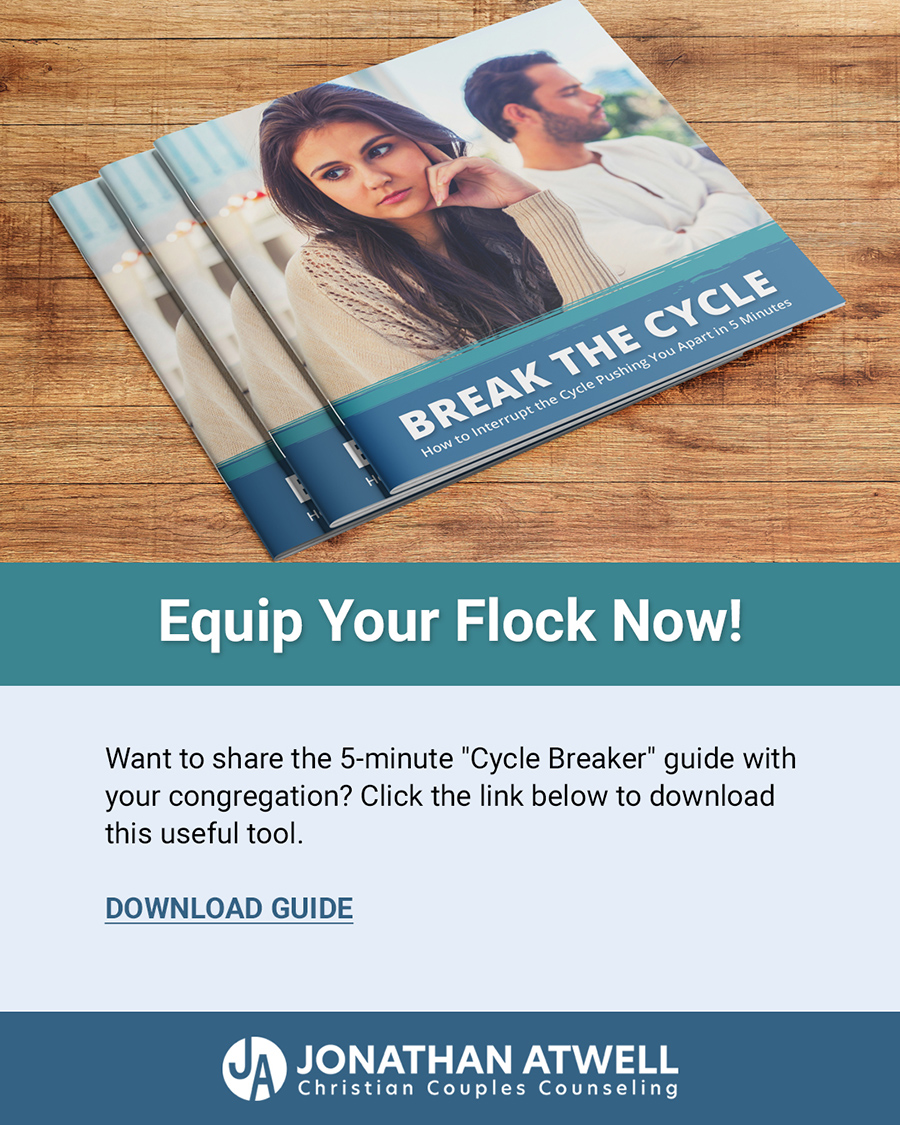
To get the B2B referral engine moving without resorting to cold calling, we focused on regional faith leaders on LinkedIn. I took the core insights from the Break the Cycle brochure and turned them into a clean, 5-slide LinkedIn carousel. This asset was framed as a helpful mental health tool that pastors could easily share with struggling families in their congregations, rather than a direct sales pitch.



Phase 5: Engagement & Video Assets
To keep visitors on the homepage longer and build immediate personal rapport—which is huge in the counseling field—we put an introductory brand video on the homepage. I created custom motion graphic CTAs and branded YouTube video bumpers to help guide people smoothly from watching the video to downloading the lead magnet.
VIEW BREAK THE CYCLE BUMPER
VIEW MOTION GRAPHIC CTA
VIEW MOTION GRAPHIC CTA 2

Phase 6: Visual Assets for Lead Nurturing
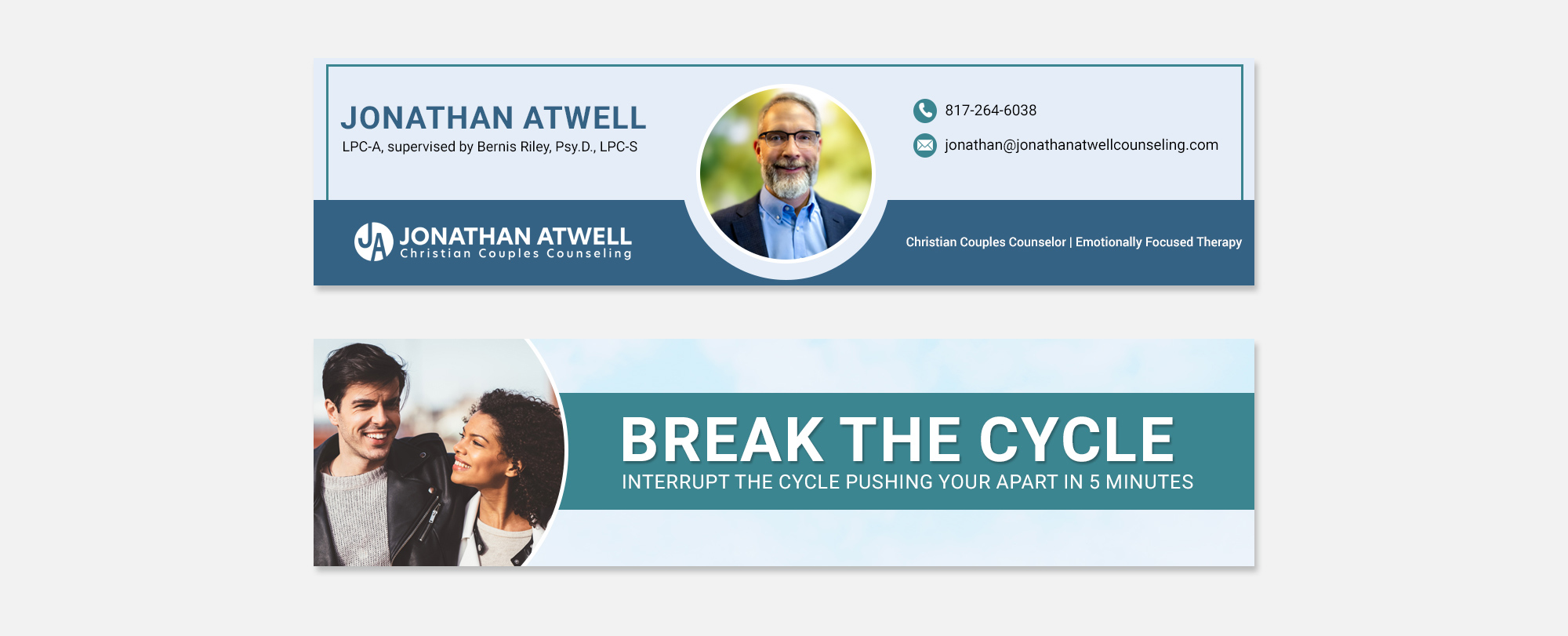
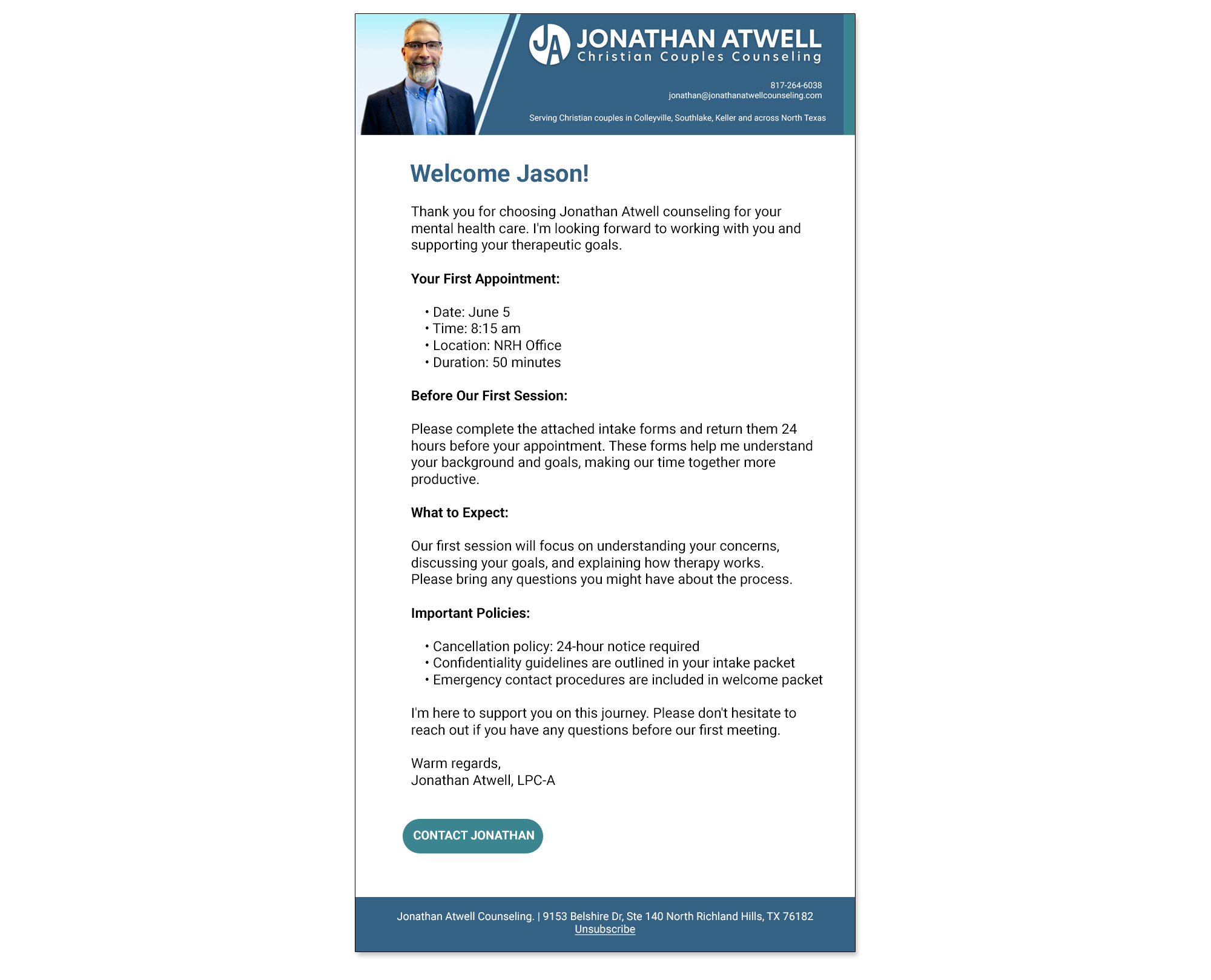
To close the loop on incoming leads, I handled the visual layout designs for the email campaigns. I designed high-conversion email layouts and a modular header system in Photoshop, making sure everything matched the primary brand palette perfectly. These graphics were built as ready-to-upload assets for the client's email platform, ConvertKit. Now, when a user downloads the Break the Cycle PDF, they are automatically dropped into a timed nurture sequence where these custom headers maintain a clean, professional brand experience.
Data-Driven Course Correction: Resolving the AI Content Gap
In May 2026, we launched Phase 1 of the Jonathan Atwell Counseling campaign, deploying a comprehensive website redesign alongside a 100% AI-generated topical content framework to eliminate legacy technical debt and establish a baseline semantic footprint. After a 60-day performance evaluation in July 2026, first-party data from Google Search Console showed that while the site was generating search impressions, high-value regional keywords remained stalled on Pages 2 and 3 of Google search results (Positions 11–30).
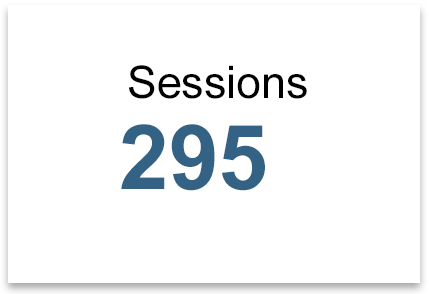
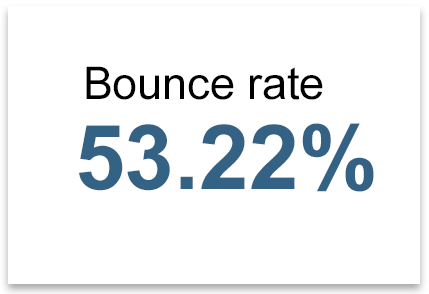
Concurrently, Google Analytics showed that the website's bounce rate improved significantly, dropping from 91% to 53.22%. While this represented meaningful progress, engagement metrics indicated there was still substantial opportunity for further optimization. A comprehensive performance audit revealed that the AI-generated content lacked the hyper-local search intent and nuanced integration of faith-based and clinical psychology topics needed to compete for Page 1 rankings.
As a result, we pivoted our content strategy away from AI-generated volume and toward highly targeted, localized content designed to close these competitive gaps, improve user engagement, and continue reducing the site's bounce rate.
60 Day Performance Review
The Version 2.0 Pivot: Intent-Driven Optimization & Tactical Execution
To address these findings, we implemented a data-driven SEO iteration framework using zero-cost native tools, including Screaming Frog, Incognito SERP analysis, and Google Keyword Planner, to replace generic AI assumptions with real-world search intelligence. We then fed this first-party keyword and SERP data into an advanced "Devil's Advocate" AI prompt framework designed to uncover non-obvious topical gaps and identify high-intent local service page opportunities. These insights informed refinements to page titles, heading structure, and on-page SEO while shaping a more targeted editorial calendar built around validated user search intent rather than AI-generated content volume.
Data Assessment: Traffic Expansion & Engagement Diagnostics
A 90-day post-implementation audit (August–October 2026) revealed several key performance indicators across search visibility, user engagement, and conversion activity:
Macro Audience Growth (YoY): Overall site traffic maintained substantial year-over-year gains, with Visits increasing 260%, Unique Visitors rising 191%, and Pageviews expanding 479%.
Micro-Local Page Adoption: Dedicated regional pages began generating organic impressions and pageviews, confirming that Google was successfully indexing and recognizing the new localized site structure.
Engagement & Conversion Signals: The overall bounce rate stabilized at 71.69%—a significant improvement over the pre-campaign baseline of 91%, despite a modest increase from the initial Phase 1 decline. Event tracking also confirmed high-intent user activity, including contact-form starts and tracked conversion events.
Key Strategic Takeaways & Next Steps
The modest increase in single-page sessions during Phase 2 reflects the site's shift toward high-intent local landing pages. Visitors arriving through these pages are often evaluating immediate service fit, geographic relevance, or location feasibility, making a single-page visit a potentially meaningful engagement rather than an automatic indicator of poor performance.
To further improve engagement and conversion performance, the ongoing optimization strategy focuses on:
- On-Page Conversion Optimization (CRO): Position prominent inline contact widgets and local social proof higher on regional landing pages to capture high-intent visitors before they leave.
- Internal Linking Architecture: Strengthen connections between specialized topical content—such as Restoration Therapy and Faith-Based Counseling—and regional service pages to encourage deeper exploration and improve the user journey.
- Local Map Pack Alignment: Align regional landing page URL structures with Google Business Profile location signals to strengthen local search relevance and maximize high-converting traffic from Google’s local results.